
On March 14th, OpenAI released the GPT-4 language model for the ChatGPT chatbot. The accuracy of GPT-4's responses has greatly improved and to a certain extent, overcomes the problem of its predecessors' "nonsensical" responses. The release of GPT-4 has reignited discussions about the potential and development speed of artificial intelligence technology. Professionals and the public have been impressed with GPT-4 and praise has poured in.
However, recently, Elon Musk and a group of AI experts and industry executives issued an open letter calling for a six-month pause on training even more powerful artificial intelligence systems than GPT-4, citing potential risks to society and humans. This also reflects society's fear of AI development.
Currently, AI's dominance is mainly due to its vast database of information and supercomputing power. However, current artificial intelligence still is Turing machines, which adopt empirical and evolutionary principles. GPT is an upgraded version of the Turing machine, and its thinking mode has switched from mechanistic to empirical and evolutionary. Fundamentally, the breakthrough of artificial intelligence requires developing self-awareness.
Having self-awareness at least means having two things: firstly, a "self-ego" to distinguish oneself from the world, which comes from the biological instinct of humans to reproduce and survive in this limited resources world. Secondly, the ability to reflect and create the concept of having a "self-ego" – the ability to introspect and create.
As of now, the idea of AI developing self-awareness seems like a fantasy. However, in the world of fiction, especially in films, creators can use this premise to further imagine and reflect on the potential impact of AI development on humans.
Assuming that humans overcome all technical obstacles and truly develop an AI with self-awareness, two questions arise:
1) What are the differences between AI and human beings if humans create an AI with self-awareness?
2) How could an AI with self-awareness consent to be enslaved by humans?
Correspondingly, movies and television shows about AI often explore two questions:
1) Using robots with self-awareness to explore the philosophical question of what humanity truly is.
2) The fear of AI destroying humanity after developing self-awareness.
This article will introduce excellent movies and television shows that deeply explore these two issues.
Below are Movies that Use AI with self-awareness to explore the philosophical question of what humanity truly is.
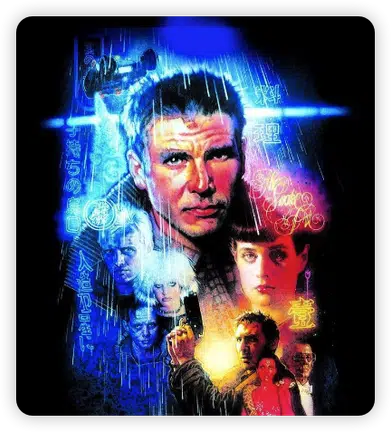
Blade Runner(1982)
The 1982 science fiction film "Blade Runner" explores the question of what it means to be human through the use of robots with human-like characteristics. Based on the novel "Do Androids Dream of Electric Sheep?" by Philip K. Dick, the movie is set in 2019 and follows retired "blade runner" Harrison Ford as he reluctantly accepts a mission to hunt down and "retire" rogue replicants - advanced androids designed to look and act like humans - on behalf of a large corporation. As he investigates, Ford develops feelings for a female replicant, leading him to question his own emotions and humanity. The film is widely regarded as one of the greatest sci-fi movies of all time, thanks in part to its unique, futuristic art design that helped establish the "neo-noir" genre, as well as director Ridley Scott's personal touch and vision.

Blade Runner 2049(2017)
"Blade Runner 2049," is a sequel to the 1982 film "Blade Runner." The story picks up where the previous film left off and continues to explore the theme of whether or not replicants, androids created to look and act like humans, can truly be considered human. The movie raises questions about how society treats these replicants - are they simply scrap metal to be disposed of, or should they be given the same rights and treatment as humans? Unlike the first film's conflicted protagonist, played by Harrison Ford, "Blade Runner 2049" takes a different narrative approach, following Ryan Gosling's character as he unravels a mystery from 30 years prior and moves away from the traditional debates of good versus evil. As the audience follows along with Gosling's character, experiencing breathtaking visuals and uncovering new interpretations, they also get closer to understanding the answers to the film's central questions.
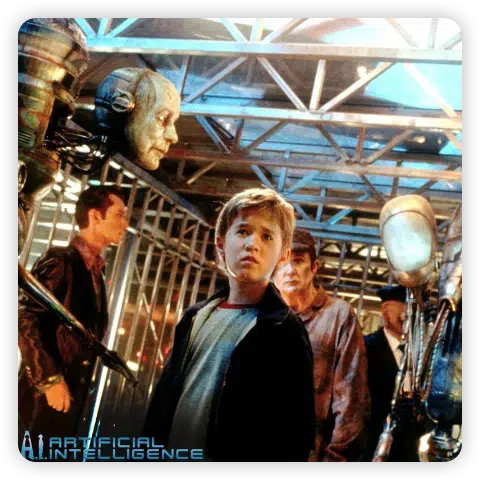
A.I.(2001)
"Artificial Intelligence" (2001) is directed by Steven Spielberg and tells the story of a tech company that creates a robotic boy named David who is capable of love. David is given to an employee because his biological son is in cryogenic stasis due to a terminal illness. As David becomes more familiar with his new family, the biological son miraculously recovers, causing David to become unwanted and discarded. Refusing to accept his fate, David embarks on a journey to find meaning and purpose. The film prompts viewers to contemplate whether machines capable of emotion are truly human or simply machines.

Westworld Season 1
"Westworld" is a science-fiction television series that premiered on HBO. The show takes place in a futuristic world that combines the Wild West with highly advanced, adult-themed amusement park full of lifelike robots. Real-life guests visit the park to experience slaughter and pleasure without realizing that the robots have become self-aware and are planning a rebellion. The series explores the evolution of robots in the age of AI: What happens when machines can think and feel like humans? Through multiple storylines and non-linear storytelling techniques, "Westworld" presents various possibilities that are both thrilling and thought-provoking.

After Yang (2021)
"After Yang" is a heartwarming sci-fi movie directed by Korean-American filmmaker Kogonada. The story follows a couple in a future world who adopt a Chinese girl and buy an intelligent android named "Yang" as her companion. Yang gradually becomes like the girl's brother and a part of the family. When Yang breaks down and cannot be repaired, the family sees all his memories. The film has almost no special effects, using a prose-style lens to show the intimate relationship between machines and humans, Yang's emotions and memories, and his growth which is both hazy and heart-breaking.
In the upcoming article, a compilation of outstanding science fiction movies will be presented, which explore the fear of AI destroying humanity after developing self-awareness.
Check it here:https://www.peliplat.com/en/article/10004835/AI%3A-The-Fear-of-AI-Destroying-Humanity




Share your thoughts!
Be the first to start the conversation.