
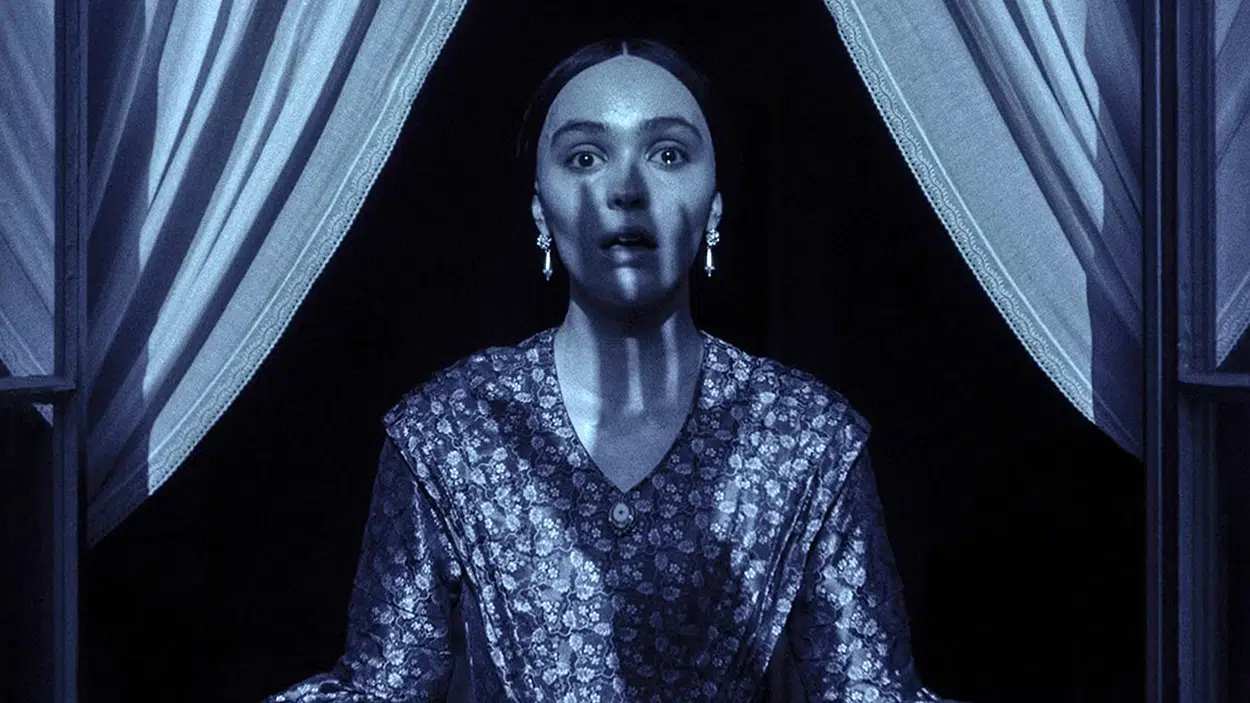
I was sitting in the theatre, nursing a half-empty bucket of popcorn and near empty cup of soda (they’re usually gone by the end of the previews). The lights in the theatre dimmed and an air of apprehension descended on the audience. A haunting image of a possessed Ellen Hutter (played by Lily-Rose Depp) appeared on screen, unknowingly calling forth a dark and mysterious force to become her guardian angel. A flashy series of quick cuts and dark images that feel overwhelming and daunting fire at you in rapid-fire as a dark angel is given new life at the hands of a troubled young woman.
And so begins Robert Eggers' Nosferatu.
The 2024 gothic horror follows Eggers’ acclaimed works, The Witch (2015) and The Lighthouse (2019), both exceptional and far superior entries in the pantheon of horror genre films. Nosferatu is unmistakably Eggers' vision, blending Gothic aesthetics and early German Expressionism with nods to the 1922 classic and his own contemporary horror filmmaking sensibilities. It's a film that deeply immerses you in a world of shadow and decay, and many audiences were enthralled by it.
I was not one of them.
Now, I’ll admit that I did enjoy this film…to a point. It’s visually arresting and there is plenty to enjoy if your primary criteria for what makes a great film are visual flair, jump scares, and references to classic films. But wooden performances, sluggish pacing, and a Swiss cheese plot meant that I couldn’t help but feel like there wasn’t a lot for me to sink my teeth into.
With his extensive background in production design, which is evident in his earlier works, Eggers has a clear and abiding love for period pieces; the less familiar the better. His recreation of 19th-century Visberg, Germany was strikingly authentic, from the rough cobblestone streets to the Gothic architecture to the costumes that feel like they were plucked directly from the time. We get a brief scene in a Romani village, and the costumes, with their traditionally eclectic, bohemian and rustic look feel so faithful that it’s difficult to believe he didn’t borrow the pieces from a museum. Count Orlok's decrepit and decaying castle is utterly mesmerizing and compliments the eerie and unsettling atmosphere, with its empty halls and corridors reflecting the lack of life that resides within Orlok himself. It made me desperately want to visit and wander its narrow, stone-laden halls…in broad daylight with plenty of company.
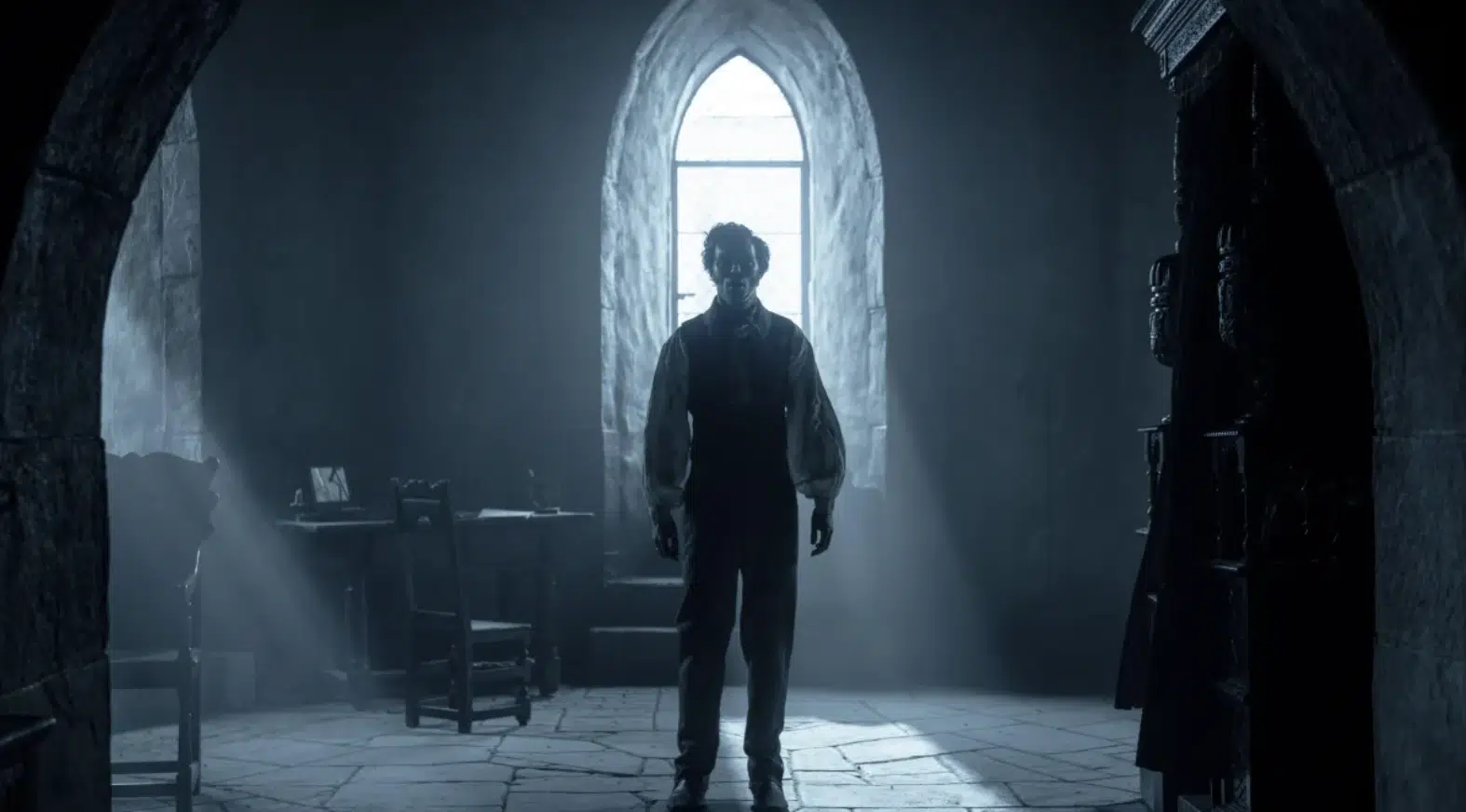
Nosferatu sees Eggers team up yet again with cinematographer Jarin Blaschke, whom he worked with previously. Blaschke delivers his usual mastery of dark and moody lighting that has become a staple of Eggers’ films. The use of shadows and low light creates a tense and otherworldly atmosphere, and you find yourself straining for details to make sense of the horror you find yourself in. The film also utilizes multiple oners and tracking shots that make us feel as though we the audience are characters in the film. A standout shot occurs when Thomas Hutter (played brilliantly by Nicholas Hoult) first arrives at Orlok’s castle and is berated for being late. The camera tracks the duo as they ascend the stairs but as it does, Orlok disappears and reappears in the dining room awaiting Thomas. It’s an ingenious way of disorienting the audience, and in the low light of that room illuminated only slightly by a massive fireplace, it feels as though we’re entering into a hell that is shrouded in shadow. The film is not without its visual flourishes but, unfortunately, this does not a great movie make, in my opinion.
So despite its various strengths, I found it was almost entirely style over substance.
Eggers has said the film is deeply personal, born from his love of the original books and his high school stage adaptation. While this passion is clear, the film at times feels inaccessible, as if it only really makes sense to Eggers. This singular commitment to a personal vision has led to a plot that feels confusing and had me racking my brain and raising my eyebrows. I mean, why was it so hard for Thomas to escape the castle during the day when Orlok was slumbering in his coffin? Why was Orlok so generous with a three-day deadline for Ellen to "surrender" to him? Why was no one on the boat suspicious of the crate that kept mysteriously opening and closing while people were dying onboard? I had so many questions and so few answers that by the end I left feeling like a vein was about to pop in my neck.
A truly startling frustration with Nosferatu is its heavy reliance on jumpscares, repeated transitions, and fakeouts, which felt cheap and uninspired. If you’re familiar with Eggers’ previous works, then you’ll probably agree that these techniques feel somewhat beneath him and belong more in a horror movie from the early 2000s. You know, the “dark times.”
There is a fakeout jumpscare in the Harding households towards the end of the film, and it was genuinely shocking how tacky it felt. Anna Harding (portrayed wonderfully by Emma Corrin) investigates a strange disturbance in the middle of the night, and we all feel that a jumpscare is coming. The camera is panning and blocking Anna’s blindspots, priming us for the big scare. But then, barely illuminated by a candle, Anna turns and BANG! It turns out it was just Ellen skulking in the night and there wasn’t something scary happening after all.
I felt cheated.
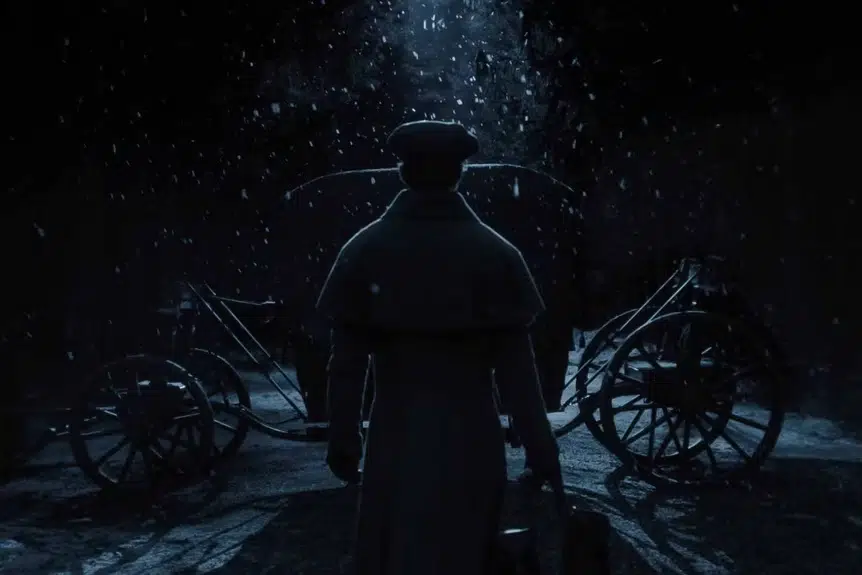
Earlier in the film, when we watch an entranced Thomas wander towards Orlok’s castle in the dead of night and a carriage ominously heads towards him on a lone and darkened road, I couldn’t help but think of the scene in Austin Powers: International Man of Mystery (1997) when the security guard watches as a slow-moving steam roller makes its way towards him and crushes him. This scene also has an abrupt cut to black and back to the image of the carriage in the middle of the road, and this transition is used exhaustingly in the film. We see something terrifying about to happen, then we cut to black, then cut back to something else.
Again.
And again.
And again.
The film uses so many of these techniques that they feel like relics of lesser horror films. Given its lofty goal of genre and style blending, the fact that it then uses these cheap tactics feels bizarre and almost betrays its creative ideals. Throughout the film, I kept noticing these techniques being employed, and they suddenly made Eggers’ typical firm grasp of pacing and cerebral dread seem more cheap and familiar—and not in a good way.
Now, let’s talk about the performances because this film has a stacked cast, including Lily-Rose Depp, Nicholas Hoult, Emma Corrin, Aaron Taylor Johnson, Bill Skarsgard, and a murderer’s row of “those guys.”
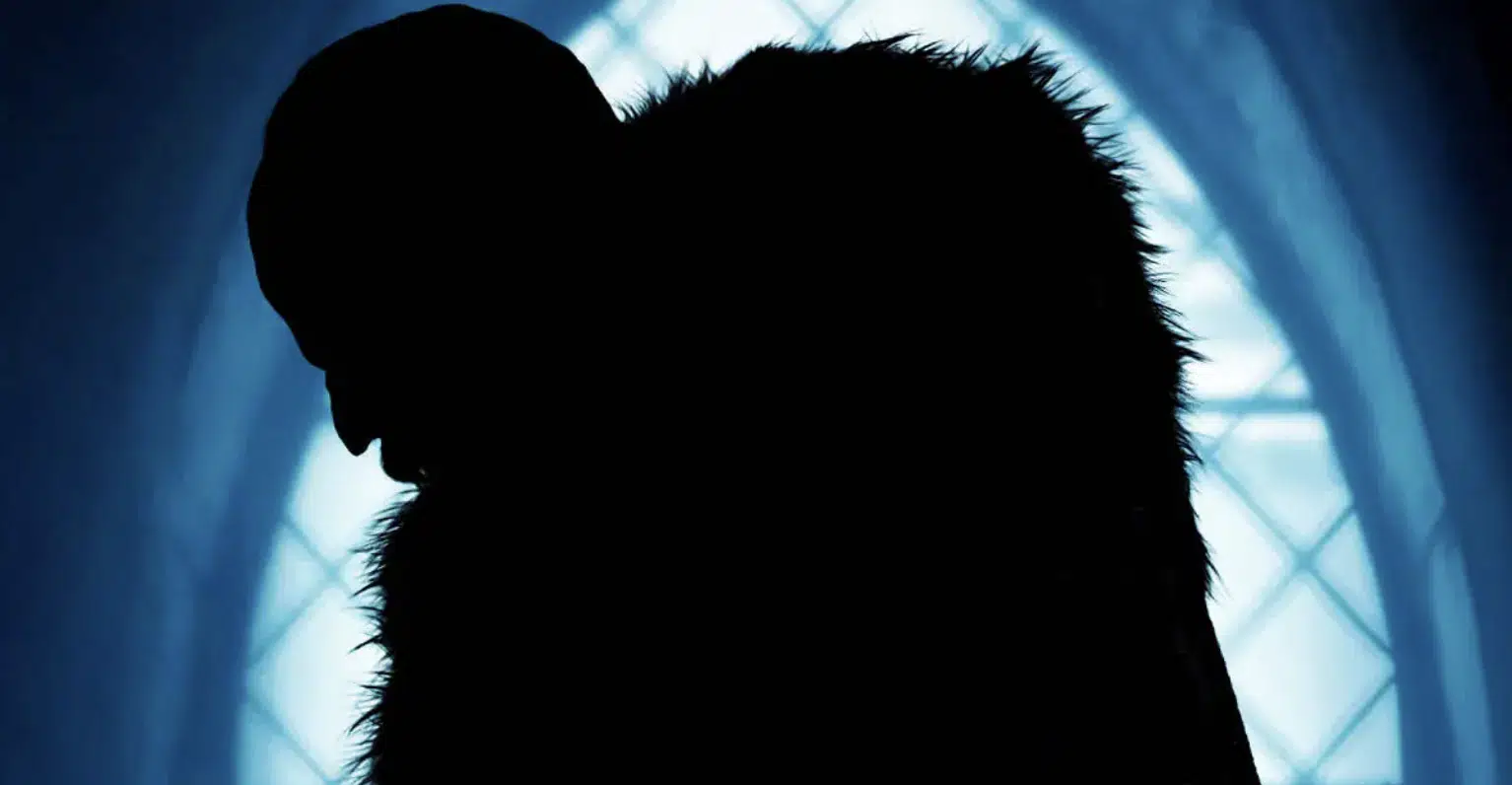
I’ll say right at the top that both Willem Dafoe and Bill Skarsgård were great in this film. Willem Dafoe is a tour de force in every film he’s in, so it is not at all surprising that he would continue his streak of scene-stealing performance in Nosferatu, as well, which sees him team up again with Eggers after The Lighthouse in 2019 and The Northman in 2022. Bill Skarsgård, who I fear is becoming typecast as the ‘monster guy,’ was great as the nightmarish Count Orlok. The low and slow, ominous voice that conjures the idea that his character is a kind of eternal figure that takes his time and savours his words is a great performance decision that almost made me overlook the ridiculous moustache that made him look like a small-town sheriff from the 1970s.
But the standout performance for me was strangely Nicholas Hoult. His ability to evoke sheer terror that conflicts with his sense of duty to protect his beloved wife was genuinely compelling. His role, on paper, is something of a one-dimensional one. His primary purpose is as a vehicle for the horror film to be told rather than a fully realized person. And yet, Hoult brings such a sincere humanity to the otherwise bland Thomas Hutter character that makes him feel sympathetic. In one scene, the camera pushes in as we see tears forming in his eyes as he is entranced and trapped by fear in a chair in the middle of the grand hall next to a roaring hearth and being enveloped in a kind of supernatural shadow. Count Orlak moves slowly and ominously towards him, figuratively tightening his grip.
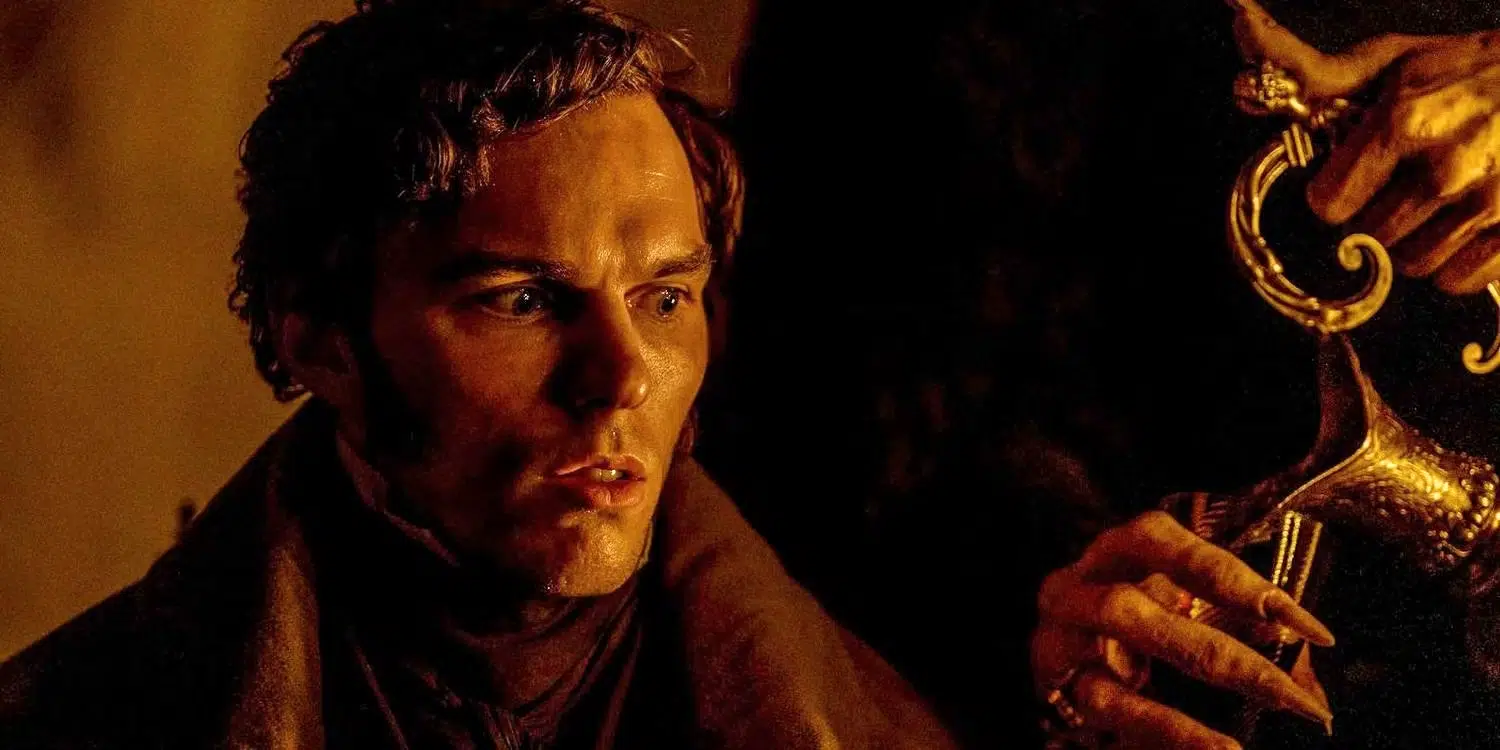
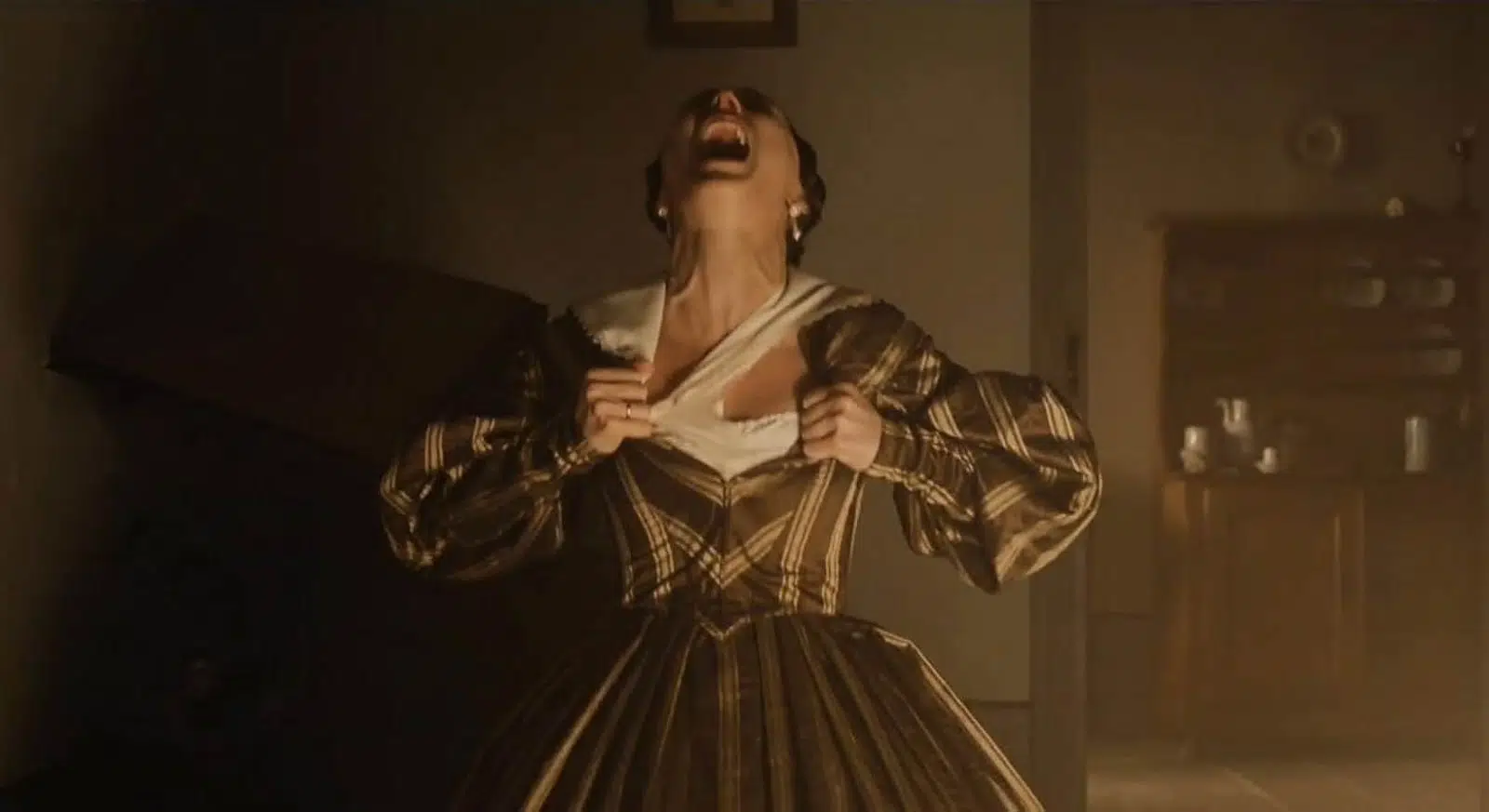
Later in the film, we feel that same helplessness as he watches a possessed Ellen convulsing as she circles him like a shark, screaming hysterically at him, cursing him, accusing him, begging him. And we see a loving husband desperate to find a way to help his wife.
We feel every bit of it. We feel his terror and desperation. We feel his mind racing through what to do and reckoning with just how powerless he is.
For her part, Lily-Rose Depp did a brilliant job in much of the film. Her portrayal of an innocent but troubled woman who is struggling to understand herself and the world around her is fantastic. The fear she feels of being apart from Thomas, and that fear that turns to empowerment she feels when she decides to no longer be the victim and remove the curse on her own terms was excellent. Now, I will admit, there are some times when she is in a more ‘normal’ headspace where her performance feels a bit like it belonged in a Hallmark movie. In particular, Ellen and Anna (Emma Corrin) are wandering by the water and she asks Anna about the feeling of her soul being separated from her body. But as she does, she looks wistfully into the distance and it feels a little like it belongs in a different movie. It didn’t pull me out of the film, necessarily, but I definitely raised an eyebrow. But despite these small moments, she does an incredible job with a difficult character.
But there are some problematic performances too, and the most problematic one comes from none other than the people’s Kraven the Hunter, better known as Aaron Taylor Johnson, who plays Friedrich Harding. His performance throughout the film is almost laughably wooden and awkward. I found myself almost frustrated when he was on screen. And, just to be clear, I’m actually a fan of Aaron Taylor Johnson, and I have seen him do fantastic work in other films. So I couldn’t help but wonder what exactly went wrong with his performance. His line delivery felt like he had read the line about 12 seconds before delivering them and he was wondering if there were any granola bars left at the crafty table—It was shocking. At one point, we have Hoult, Dafoe and Taylor Johnson debating what to do about Ellen’s curse, and Taylor Johnson moves about the space and expresses his disbelief in the supernatural curse but as he does, it almost feels like you can see him struggling to remember his lines and looking for his T-mark to move to and from. Despite being a talented and acclaimed actor, his performance in Nosferatu felt amateur.
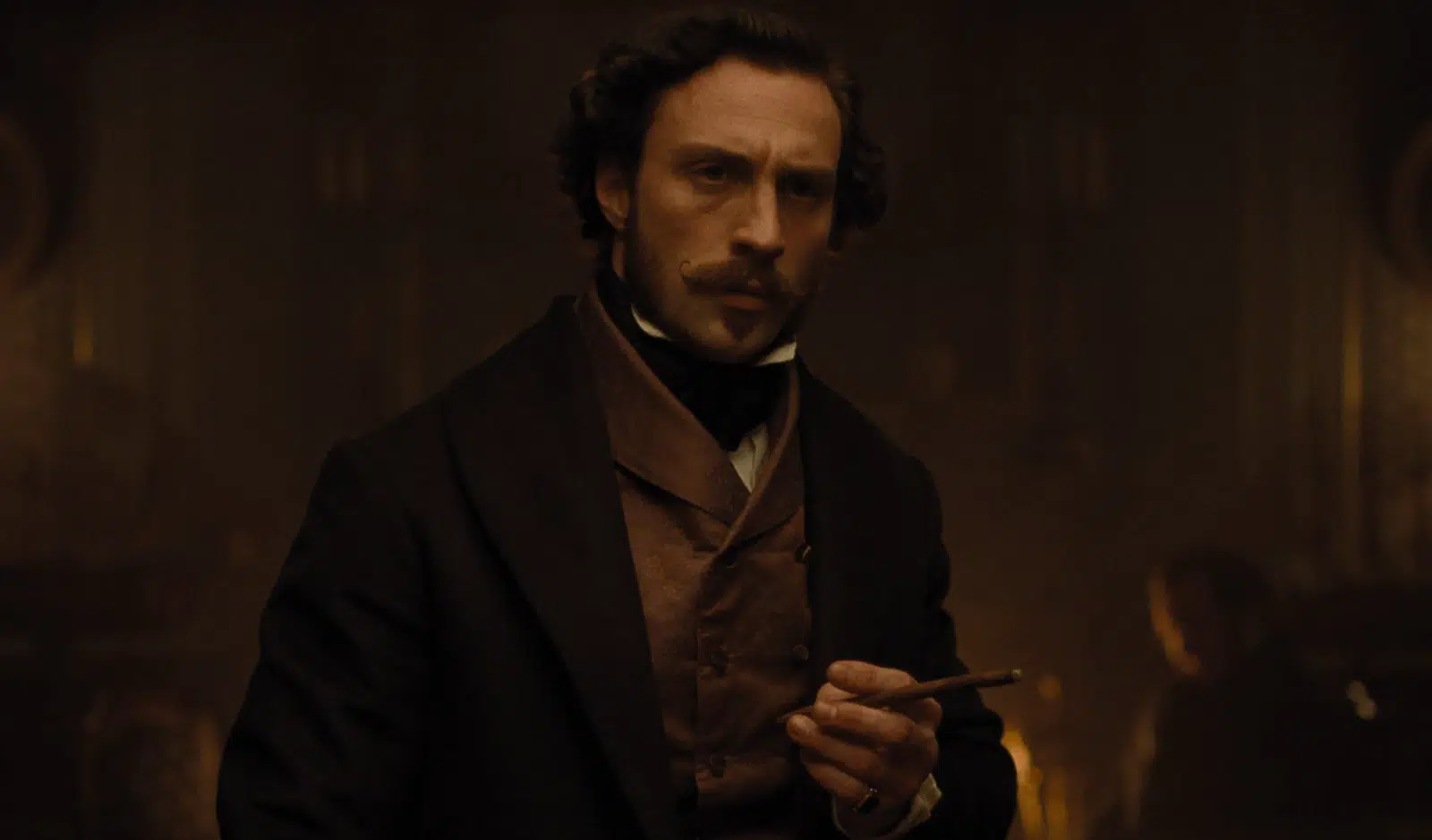
But this performance revealed something important for me: Robert Eggers is a visual director, not an actors director.
Eggers has such a special style that has become recognisable across all of his work. It’s one of the reasons we love to watch his films; they look incredible, feel tense and atmospheric, and are riddled with commentary and compelling themes. But it feels like he needs actors who implicitly understand the characters and can fully inhabit those roles independently, and it feels like Aaron Taylor Johnson requires a more actor-focused director who can offer plenty of adjustments and direction. It explains why Willem Dafoe can bring his weird and eccentric characters to life in such an organic way, and why Aaron Taylor Johnson’s character feels stilted and about as three-dimensional as a piece of printer paper.
In the end, I was legitimately excited for Nosferatu and prepared to enjoy another entry from one of the masters of arthouse horror but I wound up feeling disappointed and frustrated. The thin and hole-riddled plot, cheap horror techniques and crutches, awkward pacing in editing, and wooden and less-than-compelling performances meant I left feeling like Nosferatu was only half completed.
These are my initial thoughts on the film, and it’s clear that I’m somewhat in the minority. I am nevertheless excited to see what Robert Eggers does next, which we now know will never be modern day. That being said, with a director as unique and singular as Eggers, he could sign on to make Anchorman 3 and I would be there on opening night.
Ultimately, though, Nosferatu is not Eggers’ magnum opus, and I can only hope that its yet to come.
So what did you think of Nosferatu?




Share your thoughts!
Be the first to start the conversation.