
The world is anything but peaceful at present. Smoke fills the air, and gunfire echoes. The Israeli-Palestinian conflict has always transcended the borders of just Israel and Palestine; it represents the clash between the Arab world and the Western world, a dispute between two major factions. Even the Russo-Ukrainian War, though Ukraine has NATO backing, lacks the same symbolic weight on the Russian side, remaining a localized conflict on the world stage.
The Israeli-Palestinian conflict sets the stage for broader implications. With time, more parties become embroiled. Bolivia announced the severance of diplomatic ties with Israel, while Chile and Colombia recalled their ambassadors from Israel. On the Arab front, Iran's Supreme Leader, Ali Khamenei, demands an immediate halt to Israeli attacks on the Gaza Strip. The future remains uncertain, with no clear visibility.
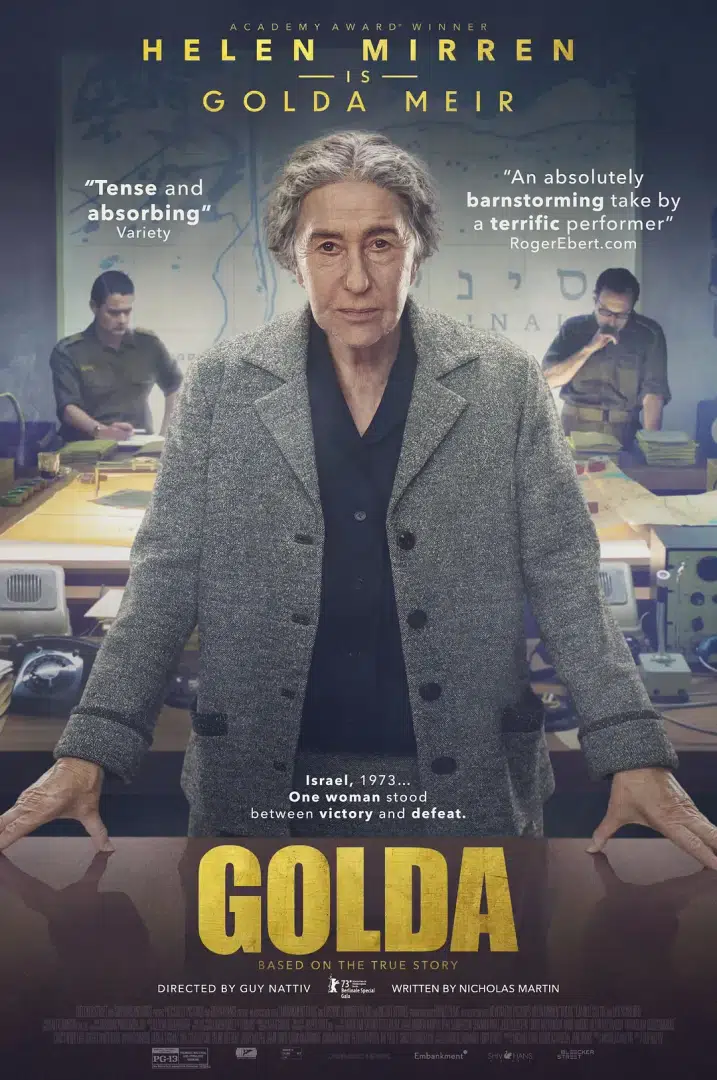
The 2023 film "Golda" focuses on the Israeli-Palestinian conflict, depicting the "Yom Kippur War" (Fourth Arab-Israeli War) that took place from October 6th to 26th, 1973, spanning 21 days. The film centers around Golda Meir, the Prime Minister of Israel during that period. While the conflict predominantly unfolds in the Gaza Strip, it's imperative to examine the Fourth Arab-Israeli War as it shaped Israel's current situation.
Golda Meir, Israel's fourth Prime Minister and its only female prime minister to date served during the Yom Kippur War. Born in Kyiv, Ukraine, Golda was of Ukrainian-Jewish descent. During her childhood, she witnessed persecution and massacres of Jews by Ukrainians and Russians. At one point, her parents barricaded the family inside a dark room, sealing all windows and doors to evade persecution. There were times when young Golda even fainted from hunger due to food shortages.

At 8, burdened by hardship, her parents scrimped and saved until they could afford to immigrate to the United States. In America, Golda spent her entire youth. Despite modest means, her father found work as a carpenter. At the same time, her mother ran a small grocery store, allowing the family to make ends meet. Golda's Jewish intellect and diligence shone through; she quickly distinguished herself in public gatherings and activities, showcasing remarkable organizational and expressive abilities.
Influenced by the Zionist movement, in 1921, at 23, Golda immigrated with her husband to the Palestinian region, becoming a pioneer of the Jewish homeland. In 1948, Golda signed the Israeli Declaration of Independence, becoming one of the nation's founding mothers. From 1949 to 1956, she served as Minister of Labour, followed by Minister of Foreign Affairs until 1966. Her unwavering resolve and tenacity earned her the admiration of David Ben-Gurion, Israel's founding father and first Prime Minister, who called her the only "man" in the cabinet. From 1966 to 1969, she served as Secretary-General of the Labour Party. At 70, Golda Meir became Israel's Prime Minister in 1969.

Films like "The Iron Lady," "Darkest Hour," and even "Die Wannseekonferenz" delve into the historical decisions made by political giants at critical junctures. "Golda," devoid of war scenes, delves into the inner workings of political figures, exploring their internal struggles and conflicts during the decision-making process. While demystifying these figures reveals their psychological nuances, enriching their characters and enhancing their allure.
The Yom Kippur War, also known as the Fourth Arab-Israeli War, had a pivotal impact on the Israeli situation, laying the foundation for its current landscape. Subsequent wars have failed to alter Israel fundamentally. However, the Yom Kippur War significantly affected Golda, directly leading to her resignation. She faced criticism for failing to anticipate the sudden Arab attack, resulting in significant initial losses for Israel, nearly pushing the nation to the brink of destruction.
Dubbed the "Yom Kippur War" because it erupted on October 6th, coinciding with the Jewish Yom Kippur, the most solemn and sacred day of the Jewish calendar. On Yom Kippur, devout Jews abstain from eating, drinking, and working, congregating in synagogues to pray, seeking atonement for sins committed or potentially committed over the past year. The entire nation of Israel comes to a standstill on Yom Kippur, enveloped in solemnity.
Launching a war against Israel on this day is seen as a religious insult to the Jewish people. Nevertheless, the prepared Arab world deliberately chose this day for a surprise attack on Israel, knowing that Israel's defenses would be at their lowest. Even Golda, like everyone else, never anticipated an Arab attack on this day.
On October 6th, 1973, Arab nations simultaneously attacked Israel from two fronts: Egyptian forces led the assault towards the Sinai Peninsula, while Syrian troops targeted the Golan Heights. With Israel observing a national holiday that day, many soldiers were on leave. Israeli forces were caught off guard at the onset of the war.
In the Sinai Peninsula, over 200 Egyptian warplanes swiftly reached the Suez Canal, decimating over 90% of Israeli positions within 20 minutes, crippling Israel's communication systems. Subsequently, tens of thousands of Egyptian soldiers crossed the Suez Canal. In the Golan Heights, with the cover of over 600 artillery pieces, over 1,000 Syrian tanks surged toward Israeli positions on the highlands.
Within the first week of the war, Arab coalition forces achieved significant victories, and Israeli troops were in dangerous positions. Backed by the Soviet Union, Arab nations received assistance, notably the 2K12 "Kub," causing substantial losses to the Israeli Air Force. Additionally, the Soviet Union provided Arab states with 16,000 tons of supplies.
European reluctance to openly support Israel, along with the fear of potential oil embargoes from Arab nations, played a role in their stance, especially considering the formidable presence of OPEC. Following the Yom Kippur War outbreak, European nations refrained from openly siding with the US, Western Europe, or Japan, fearing repercussions from OPEC. This led to the declaration of an oil embargo against these regions, directly contributing to the "Oil Crisis" of the 1970s.
Thus, Golda Meir, as Israel's Prime Minister, faced immense pressure during the Yom Kippur War, almost suffocating under its weight. However, she stood firm, refusing to initially surrender, negotiate, or support peace talks. Instead, she backed Ariel Sharon's hawkish approach to counterattack, firmly believing in Israel's ability to turn the tide.
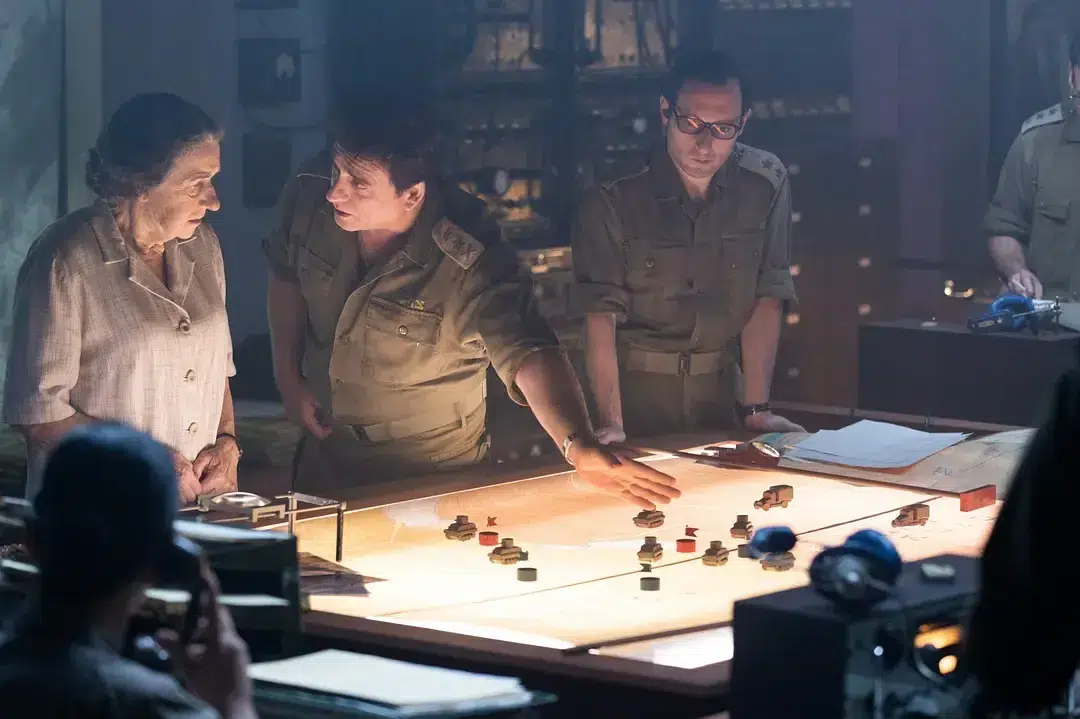
Ultimately, victory was achieved through technology. Israel used American satellites to identify a gap between the second and third Egyptian armies. Israeli forces swiftly maneuvered through the gap, encircling the third Egyptian army in the desert of the Sinai Peninsula. Trapped and with their water supply cut off, tens of thousands of soldiers faced imminent dehydration.
All eyes were on Golda, pressuring her to provide humanitarian aid to the besieged Egyptian army. However, she resolutely refused, demanding that Egypt either recognize Israel's status and engage in peace negotiations publicly or face the prospect of all soldiers in the third Egyptian army perishing from dehydration.
"Golda" highlights Golda's decisiveness and resolve, as well as her contributions during the Yom Kippur War. Some argue that "Golda" aims to redeem Golda, as she faced criticism for inadequate preparedness against the sudden Arab attack, resulting in unnecessary losses and damage to Israeli forces and defenses. The backlash prompted Golda to resign before completing her term.
Golda's oversight stemmed partly from excessive confidence in Israel's defenses. After Israel captured the Sinai Peninsula during the Six-Day War, they constructed the Bar-Lev Line along the Suez Canal. Israel spared no effort or expense, investing hundreds of millions of dollars to build a defensive system stretching approximately 175 kilometers along the canal, with a depth of about 10 kilometers. The core of this defensive line was the Bar-Lev Line, a sand dam along the Suez Canal.
However, the Egyptians, more familiar with the desert, devised a simple yet effective solution to breach the seemingly impregnable Bar-Lev Line. A young Egyptian engineering officer proposed using high-pressure water jets from fire trucks to erode the sand dam, creating breaches for subsequent forces to exploit. In practice, this tactic proved successful. During the Yom Kippur War, the Egyptians breached over 60 gaps in the Bar-Lev Line within five hours, shattering Israel's illusion of an impenetrable defense. Unfortunately, this visually compelling aspect of the war did not feature in the film "Golda."
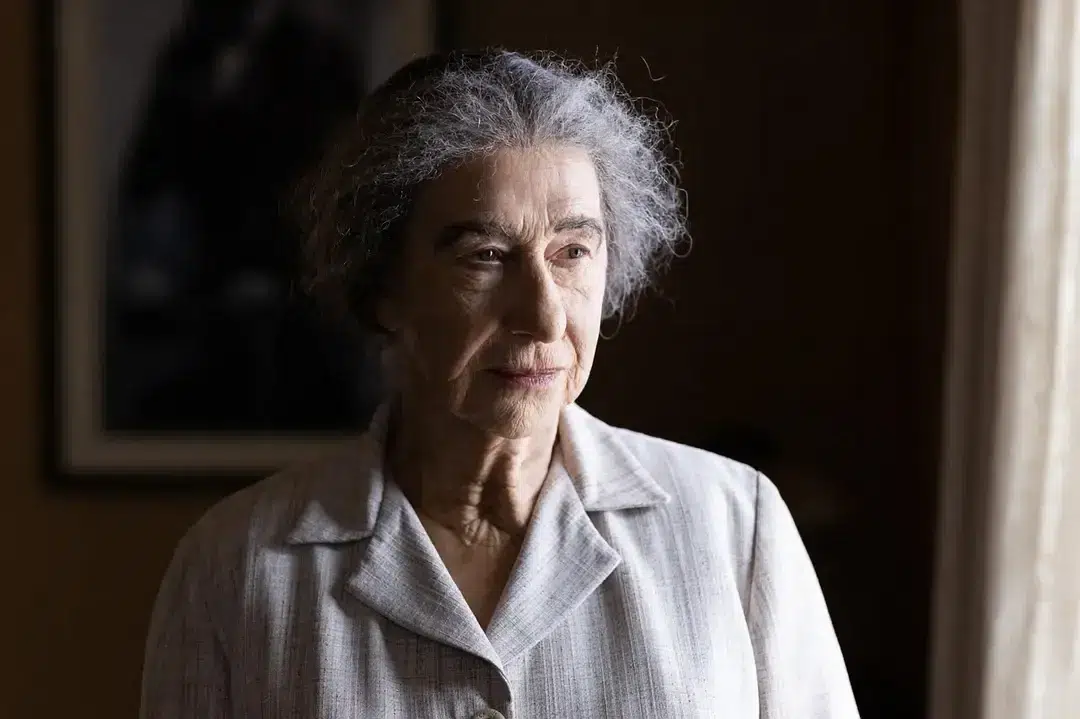
Helen Mirren's portrayal of "Golda" is masterful, yet one may notice discrepancies compared to real-life images of Golda. Particularly, Mirren fails to capture Golda's commanding presence fully; her gaze lacks the intense determination characteristic of Golda. Mirren's portrayal leans too heavily on gentleness, missing Golda's unyielding resolve.





¡Comparte lo que piensas!
Sé la primera persona en comenzar una conversación.